A Professional's Take on the New Proart P16 H7606 2024
Introduction
The Proart P16 H7606 2024 arrives with an explicit focus on creative professionals: photographers, videographers, designers, and engineers who need color-accurate displays and sustained compute performance. This review examines the laptop from a professional perspective, addressing what buyers typically care about—display fidelity, sustained performance under real workloads, thermals and acoustics, port selection, and long-term serviceability. Instead of a marketing summary, the article offers practical impressions and guidance for selecting this model against typical alternatives in the creator-class 16-inch space.
Product overview and positioning
The Proart P16 H7606 2024 sits in the segment of premium 16-inch creator laptops that prioritize color accuracy and stable performance. It appears aimed at users who need more than a high-end ultraportable but do not require a full mobile workstation's heft. Typical target users are content creators who edit video, color-grade footage, work in high-resolution photography, manage multi-track audio, or run GPU-accelerated creative apps and occasional 3D workloads.
Design and build quality
From a professional standpoint, the chassis and mechanical build matter as much as the internals. The Proart P16 H7606 2024 adopts a restrained, professional aesthetic with an emphasis on rigidity and thermal accommodation. Key points for studio and field use include:
- Chassis stiffness: A rigid lid and base help protect internal components and support precise hinge action, which professionals appreciate when calibrating screens or using the laptop on uneven surfaces.
- Port layout and accessibility: Ports positioned along the sides and rear reduce cable clutter in a desk setup. The availability of full-size USB-A, USB-C with DisplayPort/Thunderbolt-capable signals, HDMI, card reader and Ethernet (or a dependable USB-to-Ethernet option) is often decisive for workflows that rely on external storage and fast media offload.
- Weight and portability: Although not featherlight, the weight remains reasonable for a performance-oriented 16-inch laptop—trade-offs that professionals accept for improved thermals and connectivity.
Display: the most important instrument
For image and video professionals the display is the primary tool. The Proart P16 H7606 2024 positions itself strongly here, with a 16-inch panel optimized for color accuracy and tonal control. Key display considerations assessed:
- Color gamut and calibration: Accurate coverage of Adobe RGB and DCI-P3 is critical for print and cinema-oriented work. The P16’s defaults are factory-tuned and it supports hardware calibration workflows. Professionals should still validate factory calibration with their own colorimeter and reprofile in their working environment.
- Panel type and uniformity: A high-quality 16:10 (or similar) panel with a high native resolution provides workspace for timelines and large images. Uniformity across the display, especially for brightness and white point, matters when color-matching across displays or for critical retouching.
- Brightness and HDR: Good peak brightness and local dimming (when available) improve previewing HDR content and working in bright rooms. For content creators who grade HDR, an HDR-capable display with reliable metadata handling is a plus.
- Anti-glare and reflectivity: A matte or low-reflective coating reduces distractions during long editing sessions, especially in mixed lighting conditions.
Performance and real-world workflows
The Proart P16 H7606 2024 targets sustained performance rather than short bursts. For creative professionals, the decisive factors are how the laptop behaves under extended workloads—rendering timelines, encoding batches, or running GPU-accelerated effects. Observations and guidance:
- CPU and multitasking: Multi-core CPU performance influences export times, complex filters, and multitasking with background renders and virtual machines. Professionals benefit from more cores/threads and efficient cooling that keeps turbo frequencies high under load.
- GPU acceleration: Video editing applications, 3D viewport performance, and certain photo-processing operations rely heavily on GPU. A capable GPU with robust driver support for creative applications accelerates real tasks like timeline scrubs, real-time color effects, and hardware encoding/decoding.
- Memory and storage: Fast NVMe storage and ample RAM are non-negotiable. Large photo libraries, multi-cam timelines, and virtual machines demand both capacity and bandwidth. Expandable RAM and multiple M.2 slots offer future-proofing for studios that keep a machine for several years.
- Sustained performance: Cooling design determines whether the laptop maintains throughput during long exports. A balanced thermal solution that keeps fan noise acceptable while avoiding thermal throttling is ideal for shared studio environments.
Thermals, noise, and ergonomics
Noise and thermal behavior often differentiate a well-designed professional laptop from a merely powerful one. The Proart P16 H7606 2024 focuses on predictable thermals so users can plan where to place the laptop during intensive tasks. Professionals will appreciate:
Shop the latest Electronics picks on Amazon.
Browse Now →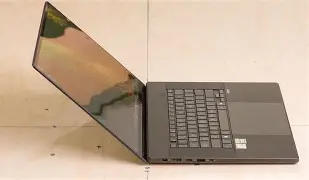
- Predictable fan curves: Users prefer a machine that either runs quiet or ramps consistently rather than oscillating unpredictably.
- Heat distribution: Avoiding hot palm rests and maintaining a comfortable keyboard surface is important during long sessions.
- Comfortable typing and hinge action: A responsive keyboard with good travel and a sturdy hinge that minimizes screen wobble improves day-to-day efficiency for writers, editors, and engineers.
Connectivity and expandability
Professionals often connect a bevy of peripherals: external displays, audio interfaces, storage arrays, and capture devices. The Proart P16 H7606 2024 is designed with those needs in mind:
- Thunderbolt/USB-C: Thunderbolt-capable ports enable multi-4K external displays, high-speed storage, and eGPU or dock connections—useful for studio setups.
- Card reader: A full-size SD card reader or a UHS-II compatible slot dramatically speeds media offload compared with USB adapters.
- Ethernet and Wi-Fi: Reliable wired networking remains important for uploading large files or collaborative editing; dual-band Wi‑Fi with the latest standards helps when wired access is impractical.
Battery life and mobility considerations
Battery life for creator laptops is a compromise: high-performance components and bright, high-resolution panels consume power. Professionals should expect:
- Studio vs. field use: In-studio editing on battery is feasible for lighter tasks, but long-form color grading and extended renders are…
- Driver maturity: Stability of GPU drivers with creative apps reduces time lost to crashes or rendering artifacts.
- Calibration utilities: Built-in management for color profiles and easy integration with third-party colorimeters is valuable for color-critical work.
- Service and warranty: On-site or carry-in warranty options and available service parts determine long-term maintenance costs for studio fleets.
Real-world use cases
To make the review concrete, here are common scenarios and how the Proart P16 H7606 2024 fits them:
- Photographers: The combination of accurate gamut coverage, hardware calibration support, and a high-resolution display helps photographers edit large RAW files and proof prints. The card reader and fast NVMe storage simplify tethered shoots and media management.
- Video editors and colorists: For editors who assemble 4K timelines and apply GPU-accelerated effects, a balanced CPU/GPU pairing and stable thermal design provide shorter export times and smoother playback during grading sessions.
- Motion designers / 3D artists: While not a workstation-class replacement for large-scale rendering farms, the laptop offers sufficient viewport performance for modeling and animation previews, with the caveat that long renders are best offloaded to dedicated render nodes.
- Developers and engineers: Dense IDEs, containerized workflows, and simultaneous builds benefit from fast CPUs, abundant RAM, and NVMe scratch space.
Pros & Cons
- Pros
- High-fidelity display with factory color calibration and strong gamut coverage for creative work
- Balanced performance for sustained creative workloads with attention to thermal design
- Comprehensive port selection that favors studio workflows (card reader, full-size HDMI, Thunderbolt/USB-C)
- Good expandability options—RAM and storage upgrade paths that extend useful life
- Professional aesthetic and build quality appropriate for client-facing environments
- Cons
- Weight and bulkier profile compared with ultra-thin consumer laptops—less convenient for ultralight travel
- Battery life is modest under heavy use, as expected for high-brightness displays and powerful CPUs/GPUs
- Fan noise under long, full-load sessions can be noticeable in quiet studios unless configured carefully
- Premium price relative to mainstream consumer laptops, reflecting professional-grade components and calibration
Comparison table
Feature Proart P16 H7606 2024 ProArt P16 (2023) Typical Creator 16-inch Display 16" high-fidelity panel, factory color calibration, wide gamut coverage 16" professional panel, strong gamut but earlier calibration profile 16" high-res panel, variable gamut and calibration quality Performance H-class CPU options with capable GPU for content creation Previous-gen H-class CPUs and mid-tier GPUs Varies—often trade-offs between thinness and sustained performance Thermals Engineered for sustained workloads, balanced fan curves Improved over older consumer models, but less refined Often limited by slim chassis, leading to throttling under long loads Ports Generous—USB-A, Thunderbolt/USB-C, HDMI, card reader Similar set, sometimes fewer Thunderbolt lanes Varies; some thin models omit full-size HDMI or card readers Expandability RAM and storage upgrade paths Partial expandability; may be soldered RAM in some SKUs Often limited on ultra-thin designs Battery Moderate—optimized for short bursts and lighter tasks on battery Similar—best plugged in for heavy workloads Varies widely; thin models may prioritize battery over performance Buying guide: what to check before purchasing
Buying a creator-class laptop is about matching the machine to real workflows. The following checklist helps evaluate whether the Proart P16 H7606 2024 is the right fit.
Looking for the best Electronics deals on Amazon?
See Deals →1. Validate the display for your work
- Confirm native gamut coverage (sRGB, Adobe RGB, DCI-P3) and whether the panel is factory-calibrated.
- Ask whether the laptop supports hardware calibration and whether the vendor provides calibration software compatible with common colorimeters.
- If HDR workflows matter, verify true HDR support and peak brightness with local dimming.
2. Match CPU/GPU to your software
- Check whether the apps used (e.g., Premiere Pro, DaVinci Resolve, Photoshop, Blender) optimize for GPU acceleration and which GPUs are supported.
- For heavy multi-thread tasks like render farms or batch exports, favor higher core counts and faster sustained turbo behavior.
3. Memory and storage considerations
- Buy the highest RAM configuration practical (or ensure the machine is upgradable). 32 GB is a sensible baseline for serious creators; 64 GB benefits heavy video and 3D workflows.
- Prefer fast NVMe storage (PCIe Gen 4 if available) and consider multiple M.2 slots for scratch and archive drives.
4. Ports, expandability and docking
- Ensure the laptop has the ports required for day-to-day tasks: card reader, sufficient USB ports, and at least one Thunderbolt/USB-C for docking.
- Think about future-proofing: availability of Thunderbolt lanes, PCIe version, and bandwidth to external devices matters for high-speed storage.
5. Thermals, acoustics and real-world performance
- Look for independent reviews that report sustained performance (export times, long-form encoding) rather than just single-core benchmarks.
- Consider noise levels if the laptop will be used in quiet environments—software fan control or quiet modes can help, but may reduce performance.
6. Warranty and service
- Check warranty terms and the availability of extended or on-site service; studios often buy extended coverage for peace of mind.
- Find out how easy it is to replace common wear parts (battery, SSD, keyboard) and whether parts are readily available in the region.
7. Price-to-productivity ratio
Professionals should weigh the machine’s cost against the time saved on daily tasks. Faster exports, fewer retries due to color mismatches, and dependable performance offer real ROI for creative businesses.
Who should buy the Proart P16 H7606 2024?
The Proart P16 H7606 2024 is a compelling option for professionals who prioritize display fidelity and reliable, sustained performance. It is particularly well-suited for:
- Freelance photographers who need accurate color and frequent field-to-studio workflows.
- Video editors and colorists working in 4K and HDR who require GPU acceleration and consistent export throughput.
- Designers and content creators who benefit from a calibrated workspace and comprehensive connectivity to external peripherals and displays.
- Studio owners planning a small fleet and valuing serviceability and uniform color across machines.
Final thoughts and conclusion
For its intended audience, the Proart P16 H7606 2024 delivers the most important elements creatives seek: a dependable, color-accurate display, balanced sustained performance for real-world editing and rendering, and a professional build with meaningful ports and expandability. It is not the lightest or the cheapest option, but it is engineered for predictable, daily professional use rather than to be a statement piece.
Buyers who require maximum portability, ultralong battery life, or the absolute fastest possible GPU for high-end 3D rendering should compare the priorities and consider alternatives. For most photographers, video editors, and designers who trade a little portability for color fidelity, connectivity, and stable performance, the Proart P16 H7606 2024 represents a sensible, professionally oriented choice. As always, prospective buyers should pair the laptop with independent calibration tools and consult real-world workflow tests relevant to their specific applications before making a final decision.