Google Pixel 10 Pro Fold Review: Real User Experience After 3 Months
Introduction
I've been using the Google Pixel 10 Pro Fold as my daily driver for the past three months. I bought it at launch and switched most of my other devices off or left them in drawers to really force myself to live with this foldable day-to-day. What I wanted to learn was straightforward: can Google make a foldable that feels polished, useful, and reliable enough to replace my main phone and a small tablet at once? After using it for everything from email and video calls to photo walks and multi-window productivity, here are the honest things I noticed, both the wins and the annoyances.
First impressions and design
Out of the box, the Pixel 10 Pro Fold felt weighty but not unwieldy—there's a reassuring density to it that makes it feel premium. The hinge is the first thing you notice when you open and close it: it's smooth with enough resistance to hold the screen at different angles, and it doesn't have the squeaky, loose feeling you sometimes get on early foldable models.
I appreciated the understated look. Google kept the design clean: a matte finish on the back that resists fingerprints better than glossy glass, and a tightly integrated camera bar that doesn't jut out obnoxiously. One design detail I was surprised by was how flat the unfolded screen sits compared to older foldables—it's still not perfectly seamless in terms of perceivable crease, but it sits flatter in my hand than previous generation devices I've tested.
Display: the star of the show (mostly)
The internal unfolded display is what you buy a foldable for, and in many ways the Pixel 10 Pro Fold delivers. Text is crisp, colors are punchy but not oversaturated, and the adaptive refresh rate keeps scrolling silky-smooth while also preserving battery when I'm just reading emails. The cover display is also very usable: big enough to type on comfortably with one hand and wide enough for full-screen video without feeling cramped.
That said, I still notice the crease. It's not a deal-breaker—less pronounced than older models—but it's there when bright, uniform backgrounds are on screen (like when I'm reading my calendar or typing in a white document). After three months I stopped mentally counting it every time, but it's visible if you're actively looking for it. Reflection management is better than I expected; the anti-reflective coating helps, though direct sunlight still demands a tilt to find a sweet spot.
Performance and software experience
In my experience, the Pixel 10 Pro Fold is fast. Apps open quickly, switching between split-screen apps is smooth, and the device handles multiple Chrome tabs, video streaming, Slack, and a video call at the same time without breaking a sweat. The combination of Google's silicon and optimized Android build shines in daily use: animations remain fluid and background apps stay resident long enough that I don't feel like everything has to reload constantly.
One area where Google is clearly focusing is the software layer for foldables—app continuity, multi-window gestures, and window resizing are better than what I saw a year prior. Most major apps I use have adapted well: YouTube intelligently moves into a pseudo-tablet layout when unfolded, Gmail shows a two-pane view useful for triaging messages, and Google Docs scales up to use the extra width for sidebars. However, there are still a few holdouts and oddities—some third-party apps simply mirror their phone UI into the larger canvas instead of taking advantage of it, and occasionally an app will forget its last window position.
Camera: Google's computational edge
Photography is one of the Pixel line's core identities, and the Fold continues that tradition. I've taken everything from low-light street photos to daylight portraits and wide landscapes. What I found was consistently excellent processing: color rendering is natural (I prefer this to hyper-saturated profiles), HDR handling is thoughtful, and night shots are impressive for a foldable. The main sensor produces clean images with punchy detail; portraits have a pleasing separation thanks to the software-driven depth work.
Looking for the best Mobile Phones deals on Amazon?
Browse Now →There are a few caveats. Telephoto performance is good but not class-leading; if you frequently rely on very long-range zoom, you might feel it could be stronger. The ultra-wide is very useful for landscapes and interiors, but it shows a touch more distortion and less fine detail than the main sensor. For most everyday shooting, though, I found the camera system to be one of the best reasons to carry this device instead of a standard phone.
Battery life and charging
Battery life has been reliable in my experience, but it's not miraculous. On a mixed day of emails, Slack, messaging, camera use, and an hour or two of streaming, I can comfortably get from morning until late evening. On days where I heavily used the unfolded display for long web sessions or continuous video editing, I needed a top-up before bed. If you use it as purely a phone with occasional unfolding, the battery stretches further.
Charging speeds are adequate for daily life: fast enough to get a meaningful top-up during a commute, but don't expect laptop-level warp charging. I often plug in for 30–40 minutes before heading out and that's been enough to close any anxiety about getting through the day. I did notice the device gets warm under heavy loads (gaming while charging, long 5G downloads)—not hot enough to be alarming, but warm enough to notice in hand.
Hinge, durability, and daily handling
After three months of opening and closing dozens of times a day, the hinge still feels precise. Google appears to…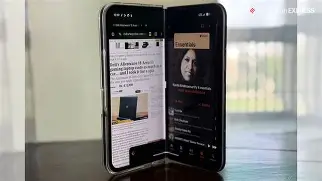
One practical observation: I found myself preferring to unfold the device when I planned to use it for more than a minute. The larger screen is genuinely more comfortable for reading long threads, editing documents, or using split view. For quick glances, the cover screen is unbeatable for one-handed use. Weight and thickness when folded are still more than a regular flagship, so it sits awkwardly in tight jeans pockets. I adapted, but it's a real physical trade-off.
Daily productivity and multi-tasking
Where the Pixel 10 Pro Fold shines is the fusion of phone and small tablet. I regularly dock a video call on one side while taking notes in another app, or run a live document editing session while keeping Slack open in a narrow column. The larger canvas improved my workflow significantly—no more toggling between apps as often. I also liked the way drag-and-drop between windows worked in practice; it's simple and saved me time when moving attachments or text snippets.
That said, there are frictions. Keyboard placement on the unfolded display isn't perfect for long-form typing unless you use a Bluetooth keyboard or split the keyboard. The virtual keyboard takes up significant vertical space, which reduces the usable area for a document. It's manageable, and the software does support floating keyboards and splitting, but it's a reminder that a foldable is a compromise between phone portability and tablet productivity.
Audio and calls
Call quality has been solid. The earpiece and bottom speaker combine for loud, clear audio for calls and media. The stereo experience is pleasant when watching videos, and I noticed the speakers preserve a decent range for dialogue and podcasts. If you are an audiophile, you will reach for wired or high-quality Bluetooth headphones, but for everyday listening and conference calls the speakers were more than sufficient.
Discover deals on Mobile Phones — updated daily.
Browse Now →What I appreciated and what bothered me
- What I appreciated: The unfolded display truly enhances multitasking; Google's camera processing remains a highlight; the hinge feels refined and stable after daily use; the phone has a premium, understated design that hides its foldable nature when closed.
- What bothered me: The crease is still visible under certain lighting; weight and thickness when folded make pockets tighter; a handful of third-party apps don't optimize for the larger display; charging is not the fastest in class and the device can get warm under extended load.
Pros & Cons
- Pros
- Excellent main camera with strong computational processing.
- Polished, adaptive software experience for multitasking and continuity.
- Smooth hinge with reassuring resistance and improved durability feel.
- Cover screen is large and usable for single-hand tasks.
- Clean, understated design and good fingerprint resistance on the back.
- Cons
- Visible crease under uniform lighting.
- Heavier and thicker than standard flagships; pocket comfort reduced.
- Not all apps take advantage of the unfolded display.
- Charging speeds are middling compared to some competitors.
- Thermals under sustained heavy load can be noticeable.
Comparison: Pixel 10 Pro Fold vs Competitors
| Model | Inner Display | Cover Display | CPU / Performance | Real-world Battery | Camera Strengths | Software Experience | Price Tier |
|---|---|---|---|---|---|---|---|
| Google Pixel 10 Pro Fold | Large, high-refresh OLED — very usable for tablet tasks | Generous cover screen for one-handed use | Google's latest Tensor-class silicon — smooth daily performance | All-day for mixed use; heavier use requires topping up | Excellent computational photography, great low-light | Fold-aware Android with improving multi-window support | Premium |
| Samsung Galaxy Z Fold (recent) | Very bright LTPO display, refined multitasking | Smaller but usable cover screen | Top-tier Snapdragon-class performance | Comparable; some models edge slightly better battery life | Versatile camera array; strong telephoto options | Very mature foldable software and app optimization | Premium |
| OnePlus Open (recent) | Large OLED, slightly lighter feeling chassis | Large cover screen, practical one-handed mode | Strong performance, often balanced with battery life | Good; optimized for balanced endurance | Good main sensor; software tuning improving | Near-stock Android with some manufacturer enhancements | Premium / Upper-mid |
Buying guide: Is the Pixel 10 Pro Fold right for you?
Who should buy it
In my experience, the Pixel 10 Pro Fold is best for people who genuinely will use the larger inner display frequently: multitaskers who juggle email, messaging, and documents, creators who benefit from a larger canvas for editing, or anyone who prefers a single device that covers both phone and small tablet needs. If you value camera quality and Google's image processing, that's a major plus.
Who should pause or consider alternatives
If your priority is the lightest, slimmest pocketable phone, or you rarely use more than one app at a time, a traditional flagship may be a better fit. Also, if you rely on a specific app ecosystem that doesn't optimize for foldables, you may encounter software quirks. For those who need the absolute longest battery life or the fastest charging speeds, some competitors offer modest advantages.
What to test in-store
- Open and close the device several times to feel the hinge resistance and listen for any unusual noises.
- Look for the crease under different lighting—if it bothers you visually, it will continue to bother you.
- Try the cover display with one hand: type, scroll, and navigate to ensure it works comfortably for your grip.
- Test camera samples in-store if possible—check portraits, night mode, and telephoto crops.
- Hold the device for long periods to check comfort and weight distribution when unfolded and when folded.
Accessories and care
Buy a protective case designed for the fold if you plan to keep it as your daily device; the hinge area benefits from a case that provides extra dust resistance. Consider a small Bluetooth keyboard if you expect to type long documents on the unfolded screen, and a reliable USB-C charger if you want to minimize top-up times.
Final thoughts and conclusion
After three months with the Pixel 10 Pro Fold, I've come away impressed and cautious in equal measure. What I loved was the way the larger screen genuinely improved certain tasks: multi-window work, reading long articles, and framing photos felt more natural. Google's camera processing continued to be a daily delight. The hinge and build felt like a significant step forward compared to earlier foldable generations, and the cover display meant I rarely had to open the device just to check a notification.
What I wasn't thrilled about were the physical trade-offs: the weight and thickness, the visible crease in certain lights, and the handful of apps that haven't fully embraced the larger canvas. Battery and charging are good enough for most people but not class-leading, and thermals under heavy sustained loads are noticeable.
In my experience, the Pixel 10 Pro Fold is a worthy pick if you want a premium foldable that prioritizes camera quality and a clean software experience. It's not perfect, and it won't be the best fit for someone who wants absolute pocketability or the fastest charging, but for those who will actually use the unfolded screen every day, it rewards you with real productivity and a unique all-in-one convenience that I've come to appreciate.